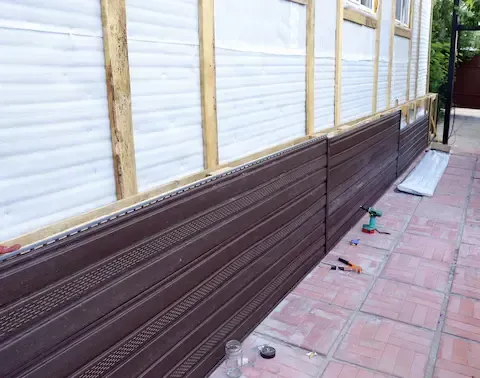
Minneapolis Commercial Siding Options for Cold Climate
Minneapolis commercial buildings face unique challenges with temperature swings that can exceed 100 degrees between summer and winter extremes. Your siding choice directly impacts energy costs, maintenance requirements, and building longevity over decades of harsh Minnesota weather cycles.
Performance Requirements for Minneapolis Commercial Siding
Commercial siding in Minneapolis must withstand freeze-thaw cycles that occur dozens of times each winter. These temperature fluctuations cause materials to expand and contract repeatedly, leading to cracking, warping, or joint failure in poorly suited products. Wind-driven rain and snow create additional moisture challenges that penetrate compromised siding systems.
Thermal performance becomes critical when heating costs represent a significant portion of operating expenses. Siding systems with poor insulation properties or thermal bridging create energy losses that compound over time. The best siding installation projects in Minneapolis prioritize materials that maintain structural integrity while providing consistent thermal barriers.
Ice dam formation affects many Minneapolis commercial buildings, particularly those with complex rooflines or inadequate ventilation. Siding materials must resist moisture intrusion from ice backup while allowing vapor transmission to prevent trapped moisture issues.
LP SmartSide for Minneapolis Commercial Applications
LP SmartSide engineered wood siding offers excellent dimensional stability in cold climates through its proprietary manufacturing process. The strand orientation and resin treatment create a product that resists moisture absorption while maintaining workability in cold installation conditions.
This siding option performs well in Minneapolis because the engineered composition eliminates many weaknesses found in traditional wood products. The factory-applied primer system creates a moisture barrier that prevents the wood substrate from direct weather exposure, reducing the risk of rot or insect damage common in natural wood siding.
Installation advantages include the material's ability to be cut and fastened in cold weather without becoming brittle. Many other siding materials become difficult to work with when temperatures drop below freezing, but LP SmartSide maintains its workability throughout typical Minneapolis construction seasons.
Maintenance requirements remain moderate, with periodic painting or staining needed every 8-12 years depending on exposure and finish quality. The engineered substrate holds paint better than natural wood, extending coating life in harsh weather conditions.
Fiber Cement Siding Performance in Cold Climates
Fiber cement siding demonstrates superior freeze-thaw resistance compared to many alternatives, making it well-suited for Minneapolis commercial applications. The cement matrix does not absorb water readily, preventing the expansion damage that affects other materials during freeze cycles.
Thermal properties of fiber cement provide moderate insulation while eliminating thermal bridging issues common with metal siding systems. The material maintains consistent performance across temperature ranges, avoiding the expansion and contraction problems that create joint failures in other siding types.
Installation considerations include the material's weight, which requires adequate structural support, and its brittleness in extremely cold conditions. Proper installation techniques become critical when working in Minneapolis winter conditions, as improper handling can cause cracking or chipping.
Long-term durability makes fiber cement attractive for commercial applications where maintenance access may be challenging. The material resists fading, warping, and pest damage while providing fire resistance that may reduce insurance costs for some commercial properties.
Metal Panel Systems for Minnesota Weather
Insulated metal panels offer excellent thermal performance for Minneapolis commercial buildings when properly designed and installed. The continuous insulation layer eliminates thermal bridging while the metal skin provides superior weather resistance and durability.
Expansion and contraction management becomes critical with metal siding systems in Minneapolis climate conditions. Properly designed systems include expansion joints and fastening patterns that accommodate thermal movement without creating stress concentrations or joint failures.
Snow load considerations affect metal panel selection, as the smooth surface can create ice dam conditions or snow sliding issues depending on building design and roof configuration. These factors require careful evaluation during the design phase to prevent winter maintenance problems.
Maintenance advantages include the material's resistance to pest damage, rot, and most weather-related deterioration. However, coating systems require periodic inspection and maintenance to prevent corrosion, particularly at cut edges or damaged areas where the substrate becomes exposed.
Moisture Management in Minneapolis Commercial Siding
Vapor barriers and breathable membranes require careful selection based on the specific siding material and building use. Minneapolis climate conditions create both heating and cooling seasons where vapor drive direction changes, requiring siding systems that manage moisture in both directions.
Ice dam prevention starts with proper siding installation that eliminates air leakage paths where warm indoor air can reach cold surfaces. Understanding commercial siding installation systems helps ensure these critical details receive proper attention during construction.
Flashing and joint sealing become critical components in Minneapolis installations where driving rain and snow infiltration can cause significant damage. Quality installation includes proper integration between siding, windows, doors, and roofing systems to create continuous weather barriers.
Energy Efficiency Considerations
R-value requirements for commercial buildings in Minneapolis typically range from R-13 to R-25 depending on building type and local energy codes. Siding systems contribute to these values either through integrated insulation or by supporting external insulation systems.
Thermal bridging reduction becomes particularly important with steel-framed commercial buildings common in Minneapolis. Siding systems that minimize direct thermal connections between interior and exterior help maintain consistent interior temperatures while reducing energy costs.
Air leakage control requires attention to siding system integration with other building components. Even high-performance siding materials provide limited benefit if installation details allow unconditioned air infiltration around penetrations or transitions.
Cost Analysis for Minneapolis Commercial Projects
Initial material costs vary significantly between siding options, but long-term performance in Minneapolis climate conditions often justifies higher upfront investments. Energy savings over the building's lifecycle frequently offset premium material costs, particularly with rising energy prices.
Maintenance cost projections should include accessibility factors common to Minneapolis commercial buildings, where winter weather limits maintenance windows and increases labor costs for exterior work. Siding materials requiring frequent maintenance may prove more expensive over time despite lower initial costs.
Installation timing affects costs in Minneapolis, where weather windows for exterior work are limited. Siding materials that install efficiently in cold conditions or allow extended installation seasons can reduce project costs through better labor availability and scheduling flexibility.
