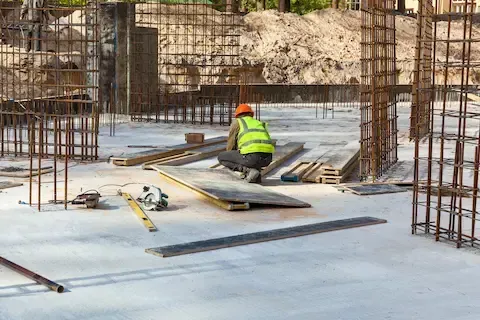
Commercial Foundation Crack Repair Guide Minneapolis MN
Foundation cracks in commercial buildings are rarely just cosmetic. In Minneapolis, where freeze-thaw cycles are aggressive and soil conditions vary significantly across the metro area, even hairline cracks deserve a closer look. Water infiltration, shifting soils, and concrete carbonation can all turn a minor surface crack into a structural liability over time. Understanding what you're dealing with — and how different repair methods perform in this climate — gives you a real advantage when planning maintenance or responding to a facilities inspection report.
Why Minneapolis Commercial Buildings Are Particularly Vulnerable
The Twin Cities region experiences some of the most demanding freeze-thaw cycling in the country. When water enters a crack and freezes, it expands by roughly nine percent, widening the crack with each cycle. Commercial buildings along the I-394 corridor and in areas like the North Loop or Warehouse District often sit on clay-heavy soils that shift seasonally, placing lateral pressure on foundation walls well beyond what standard settlement might cause.
Older industrial and mixed-use structures in neighborhoods like Northeast Minneapolis frequently have poured concrete or concrete block foundations that are now forty to eighty years old. These materials have gone through thousands of freeze-thaw cycles, and their structural integrity can degrade without visible surface signs. That's why a crack's width alone isn't a reliable indicator of severity — its location, orientation, and behavior over time matter just as much.
Types of Foundation Cracks Found in Commercial Structures
Not every crack signals the same problem, and matching the repair method to the crack type is critical.
Vertical cracks typically result from concrete shrinkage during curing or minor settlement. They're usually non-structural but still need to be sealed to prevent water infiltration.
Horizontal cracks are the most serious. They often indicate lateral soil pressure pushing against the foundation wall — a condition that requires immediate professional evaluation and may involve wall anchors, carbon fiber straps, or helical pier systems.
Diagonal or stair-step cracks in block foundations usually point to differential settlement, where one section of the building is sinking faster than another. These often require underpinning or pier installation.
Cracks around penetrations — pipes, conduit runs, window wells — are common in commercial buildings because these areas represent structural weak points. They're often repairable with polyurethane or epoxy injection but must be monitored for recurrence.
Repair Methods Used in Commercial Foundation Work
The two most common injection systems used in commercial foundation crack repair are epoxy and polyurethane. Each has a specific application context, and using the wrong one can lead to repair failure within a few seasons.
Epoxy injection is designed for structural restoration. It bonds concrete back together at tensile strength levels that can exceed the original material. This makes it appropriate for cracks that have compromised load-bearing capacity. However, epoxy requires a dry substrate and cured conditions — it cannot be used in actively leaking cracks.
Polyurethane foam injection works well in wet or damp conditions because it reacts with moisture to expand and seal. It's flexible after curing, which helps it accommodate minor ongoing movement. This is often the right choice for cracks that are admitting water but haven't caused structural compromise.
For larger structural failures — wall bow, significant horizontal cracking, or widespread settlement — mechanical solutions are necessary. Carbon fiber straps bond to the interior of foundation walls and prevent further inward movement without excavation. Helical piers and push piers are driven deep below the frost line to stabilize footings and, in some cases, lift settled sections back toward their original elevation.
Common Mistakes in Commercial Foundation Crack Repair
One of the most frequent errors building owners and property managers make is treating foundation cracks as a surface maintenance item rather than a structural concern. Applying hydraulic cement or patching compound over a crack without addressing the underlying cause — hydrostatic pressure, soil movement, or drainage failure — simply delays the problem. The patch typically fails within one or two freeze-thaw seasons, and the underlying condition worsens in the meantime.
Another mistake is delaying evaluation while monitoring a crack to see if it grows. In Minneapolis's climate, a static crack in late summer can become an actively expanding crack by February. If you're already noticing a crack, getting a professional assessment before the ground freezes is always the better call.
Finally, some property managers use residential-grade contractors for commercial foundation work. Commercial structures have different load requirements, code compliance standards, and liability considerations. Repairs need to be documented, carried out by qualified contractors, and sometimes engineered and permitted — especially if the building is occupied or the crack affects a load-bearing wall.
Local Considerations Specific to Minneapolis
Minneapolis's building inspection requirements mean that structural foundation repairs on commercial properties often require a permit and may trigger a review by a licensed structural engineer. If your building is in a historic district — common in parts of Uptown, the Warehouse District, or along Nicollet Mall — additional review processes apply before any exterior excavation or facade-adjacent work begins.
Drainage is also a major local factor. Commercial properties in low-lying areas near the Mississippi River or in parts of South Minneapolis with high water tables face persistent hydrostatic pressure. Interior drainage systems combined with sump equipment are sometimes part of a complete foundation repair plan — not just the crack itself, but the conditions that allowed water to find it in the first place.
If your property is part of a commercial campus or multi-tenant development, coordinating repair access, tenant notification, and business continuity adds a layer of complexity. Working with contractors experienced in commercial-scale Minneapolis projects ensures these logistics are handled without unnecessary disruption.
When to Bring in a Professional
You should contact a qualified commercial contractor when you observe horizontal cracking of any width, vertical cracks wider than one-sixteenth of an inch, any crack that is actively leaking water, or visible wall deflection or bowing. You should also act promptly if a crack has changed since the last inspection cycle or if there is floor heaving or door and window misalignment that suggests settlement.
Foundation cracks that continue widening or show step-cracking usually require commercial structural repair services rather than surface-level patching, since underlying settlement or load-path failure is driving the movement.
For ongoing commercial property management, establishing an annual exterior inspection schedule — ideally in late spring after the frost has fully cleared and again in early fall before temperatures drop — is one of the most effective ways to catch foundation issues before they require major intervention. You can learn more about comprehensive structural repairs to understand what a full-scope assessment typically covers for commercial properties in this region.
Foundation integrity is directly connected to the overall exterior condition of your building. If you're also thinking about accessibility compliance upgrades or exterior renovation planning, reviewing considerations around exterior accessibility for commercial buildings can help you coordinate multiple improvement projects efficiently rather than addressing each one in isolation.
Acting on foundation cracks early — before Minneapolis winters compound the problem — is almost always the more cost-effective choice. The repair options available for manageable cracks are significantly less expensive than the structural interventions required once a problem has been allowed to progress through multiple freeze-thaw seasons.
